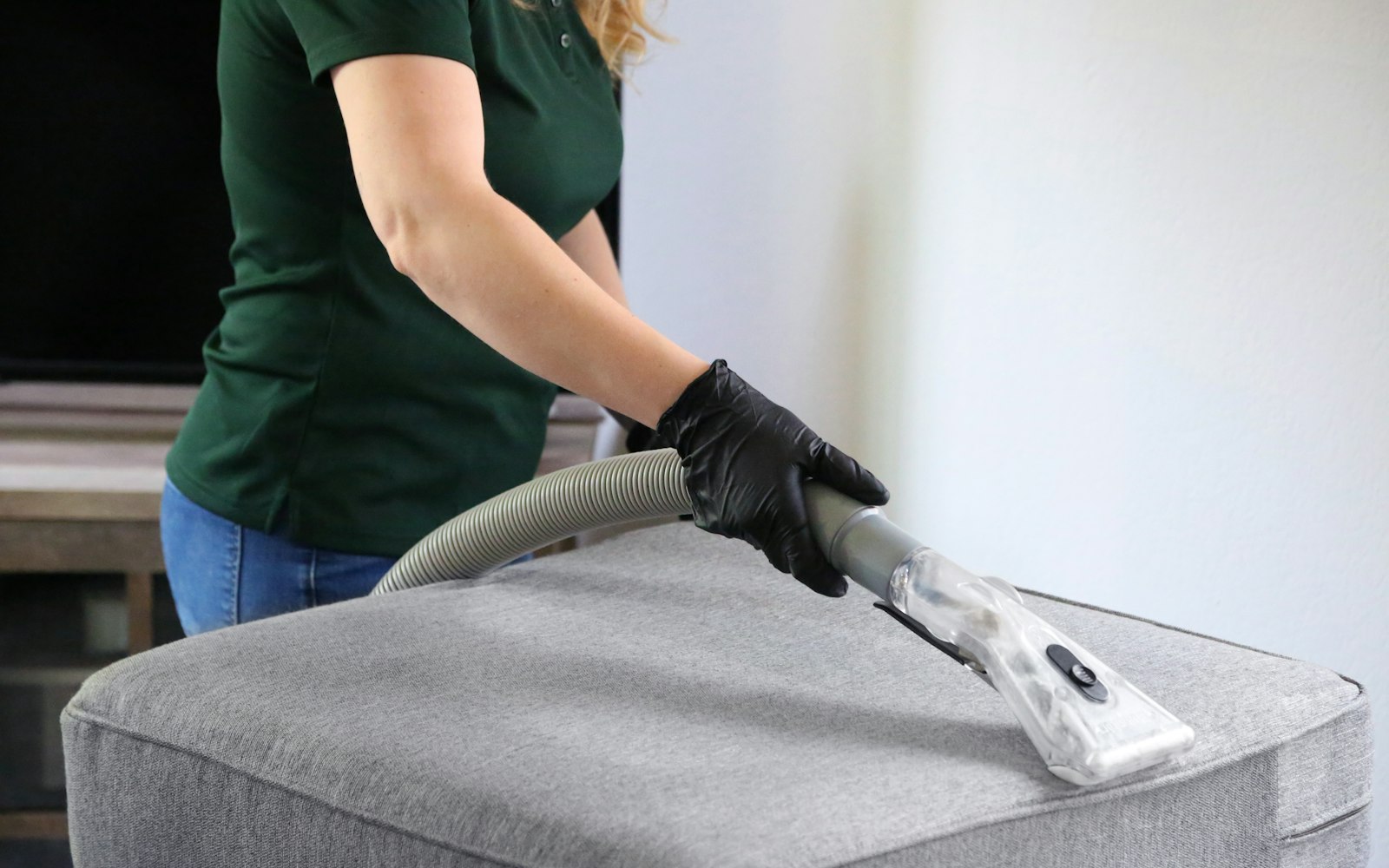

Sofas, carpets, mattresses and curtains are the soft surfaces we use every day, and they quietly hold on to dust, sweat, spills and smells. In Lahore, fine dust gets into everything, especially in homes near main roads or construction sites, and winter smog adds another layer. Regular vacuuming helps, but it cannot pull out what has worked deep into the fabric.
This guide explains how often each item usually needs a proper clean, what happens during a professional shampoo or steam clean, how long things take to dry, and how to prepare so you get the best result.
As a general guide, vacuum sofas, carpets and mattresses weekly, and get a professional clean roughly once a year, or once or twice a year for sofas and curtains. Homes with children, pets, allergies or heavy dust need it more often. A professional clean usually includes inspection, a test patch, pre-treatment, shampoo or steam and extraction, followed by a few hours to most of a day of drying.
Why soft furnishings need more than vacuuming
Vacuuming removes loose dust from the surface. Over time, though, fabric collects things a vacuum cannot lift: body oils on sofa arms and headrests, sweat in mattresses, food and tea spills, and the fine grey film that dust and smoke leave on curtains. This build-up makes colours look dull, causes odours and can bother people with dust allergies.
A professional clean uses a cleaning solution suited to the fabric and a machine that sprays and then extracts the dirty water, or steam for some items. The aim is to lift dirt from inside the fibres, not just the surface.
How often to clean each item
These are general guidelines, not fixed rules. Homes with young children, pets, smokers, allergy sufferers or heavy daily use usually need cleaning more often.
| Item | At home | Professional clean | Clean sooner if |
|---|---|---|---|
| Sofa | Vacuum weekly, including under cushions | Roughly once or twice a year | Visible dark patches on arms and headrests, spills, smells |
| Carpet or rug | Vacuum once or twice a week | Roughly once a year; more in busy rooms | Traffic lanes, stains, musty smell after the monsoon |
| Mattress | Vacuum the surface when changing sheets; rotate as the maker advises | Roughly once a year | Sweat stains, a child's accident, allergies, after illness |
| Curtains | Shake out or vacuum with a brush attachment | Roughly once or twice a year | Dusty smell, grey film, after construction or painting |
What to expect: sofa shampoo cleaning
A typical professional sofa clean follows these steps:
- Inspection. The cleaner checks the fabric type, stains and any damage, and tells you what is realistic.
- Test patch. The solution is tried on a hidden spot to check colours do not run.
- Dry vacuum. Loose dust and crumbs are removed first.
- Pre-treatment. Stains and heavily soiled areas such as arms are treated.
- Shampoo and extraction. The fabric is cleaned and the dirty water is pulled out with an extraction machine.
- Drying. Cushions are stood up or placed to allow air flow.
If your sofa has a care label, check it before the visit. Some labels use codes such as "W" (water-based cleaning is fine), "S" (solvent only), "WS" (either) or "X" (vacuum only). Many locally made sofas in Pakistan do not have labels, which is why the test patch matters. Velvet, suede-type fabrics, leather and rexine need different treatment, so mention them when booking. See Sofa Shampoo Cleaning.
What to expect: carpet and rug cleaning
Wall-to-wall carpets and loose rugs are cleaned in a similar way: dry vacuum, pre-treatment, shampoo and extraction. Rugs can sometimes be cleaned on a clean floor area or roof, and wall-to-wall carpet is cleaned in place.
- Hand-knotted and antique rugs, silk rugs and rugs with natural dyes need extra care. Tell the cleaner what you have, and ask whether they recommend on-site cleaning for it.
- Fringes can discolour, and some dyes may bleed. A test patch helps.
- Heavy furniture on carpets may need to be moved. Ask before the visit whether this is included.
See Carpet / Rug Shampoo Cleaning.
What to expect: mattress deep cleaning
A mattress cannot be soaked like a carpet, because water that goes deep inside takes a long time to dry and can cause smells or mould. A professional mattress clean usually focuses on the surface and upper layers: thorough vacuuming, stain treatment and a controlled clean with careful extraction.
- Clean both sides if the mattress is double-sided
- Old sweat stains may fade but not disappear completely
- After cleaning, keep the mattress uncovered and in a ventilated room until fully dry
- A washable mattress protector afterwards helps keep it clean for longer
What to expect: curtain steam cleaning on-site
On-site curtain cleaning means the curtains are cleaned while hanging, so you do not need to take them down, wash them and rehang them. The cleaner uses steam and suitable tools to lift dust and freshen the fabric.
- It works well for regular dust and odours, especially on heavy curtains that are hard to wash at home
- Delicate fabrics such as silk, and curtains with special linings, may need different care; mention them
- Very heavy stains or long-term damage may not come out fully on-site
- Keep windows open afterwards to help the fabric dry
See Curtain Steam Cleaning (On-site).
Drying time in Lahore weather
Drying time depends on the fabric, how thick it is, how much moisture was used, and the weather. As a rough guide, items can take from a few hours to most of a day to dry fully.
- Summer: dry heat usually helps things dry faster, though do not leave coloured fabric in direct sun for long as it can fade.
- Monsoon: high humidity slows drying. Use fans and keep windows open if the weather allows.
- Winter: cool, damp days and fog slow drying. Schedule cleaning for a sunny day if you can, and run ceiling fans.
Avoid sitting or lying on items until they are dry. Do not put a damp mattress back under a sheet or a damp rug back under furniture.
Stains: what usually comes out and what may not
Most fresh dirt, food stains and general soiling respond well to professional cleaning. Some stains are harder:
- Old ink, permanent marker and paint
- Haldi (turmeric) and some food colours
- Rust, and dye that has bled from another fabric
- Old urine stains, which can also leave odour in the padding
- Bleach marks, which are removed colour rather than dirt and cannot be cleaned out
A good cleaner will tell you honestly before starting if a stain is unlikely to come out completely.
How to prepare for the visit
- Clear sofas, beds and the floor around the items
- Remove cushion covers only if the cleaner asks; some covers shrink if washed separately
- Point out stains, delicate fabrics and anything you are worried about
- Make sure water and electricity are available
- Plan for the room to be out of use while things dry
- Keep children and pets away from wet items
Keeping things clean for longer
- Vacuum sofas, carpets and mattresses regularly
- Blot spills straight away with a clean cloth; do not rub
- Use washable throws on sofa arms and headrests
- Use a mattress protector and rotate the mattress as the maker suggests
- Close windows during dust storms and on heavy smog days
- Avoid strong home stain removers on unknown fabrics without testing first
Frequently asked questions
How long does a sofa take to dry after shampoo cleaning?
It depends on the fabric, the amount of moisture used and the weather. Drying can take from a few hours to most of a day; it is usually faster in dry summer weather and slower during the monsoon or on foggy winter days. Fans and open windows help.
Will professional cleaning remove all stains?
Most fresh dirt and general soiling comes out well, but some stains, such as old ink, turmeric, dye bleed, rust, set-in urine and bleach marks, may only fade or may not come out. A good cleaner will tell you before starting if a stain is unlikely to come out fully.
Can a mattress be cleaned without making it wet inside?
A professional mattress clean focuses on the surface and upper layers using vacuuming, stain treatment and controlled cleaning with extraction, rather than soaking. This limits how much moisture gets inside. The mattress should still be left uncovered in a ventilated room until it is fully dry.
Do I need to take curtains down for steam cleaning?
Not for on-site steam cleaning, which cleans curtains while they hang. It works well for regular dust and odours. Mention delicate fabrics such as silk or special linings in advance, as they may need different care.
Is it safe to clean a sofa that has no care label?
Usually yes, with care. Many locally made sofas do not have labels, so the cleaner should test the solution on a hidden spot first to check that colours do not run. Let them know about velvet, suede-type fabrics, leather or rexine before the visit.
Book sofa, carpet, mattress or curtain cleaning
If your furniture looks dull or smells stale, a professional clean can freshen it without replacing anything. Browse Home Cleaning on MrHazir, check the current price on each service page and book a visit on a day that gives things time to dry.
Photo: Giorgio Trovato on Unsplash