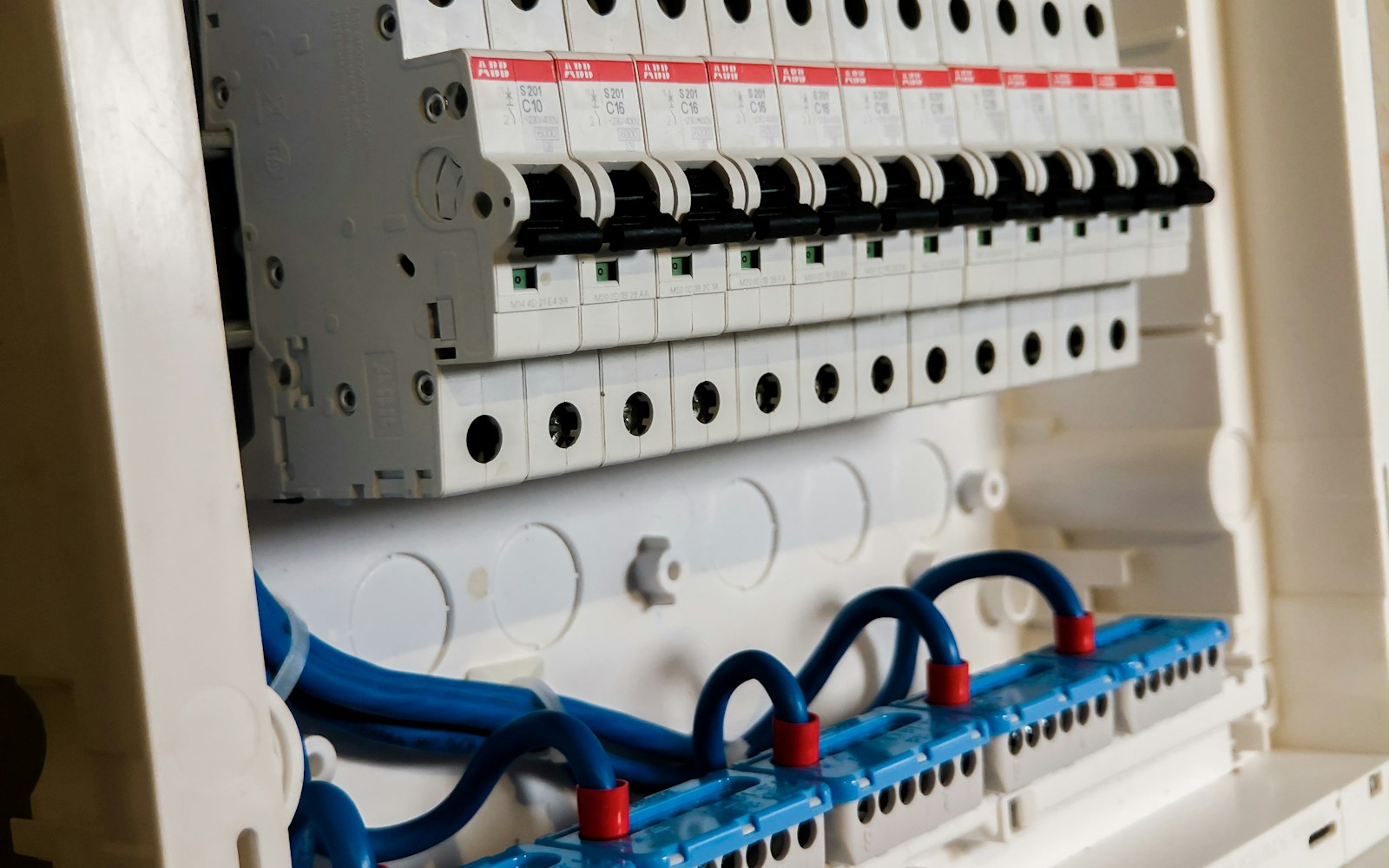

Most electrical problems at home start small. A switch feels a little warm, a tube light flickers every time the AC starts, or one breaker trips every afternoon in June. It is easy to live with these things for months, especially when the power is back on and everything seems to work.
In Lahore, though, our homes work hard. Summer heat means several air conditioners, fans and a refrigerator running at once. Load-shedding means UPS changeovers several times a day. Voltage often swings up and down. All of this puts extra stress on wiring, sockets and the distribution board (DB). This guide explains which warning signs matter, what you can safely check yourself, and when it is time to call an electrician.
Call an electrician if you notice a burning smell, sparks, buzzing, hot or discoloured switches and sockets, a breaker that keeps tripping, or lights that flicker again and again. If you smell burning or see smoke, switch off the main switch only if it is safe to reach and get help straight away. Resetting a tripped MCB once is fine; opening the DB or working on wiring is not a DIY job.
Why electrical safety needs extra attention in Lahore homes
Every house is different, but a few local conditions come up again and again:
- Heavy summer load. Wiring that was fine for fans and lights years ago may now be carrying two or three ACs, a geyser in winter, a microwave and a water pump. Cables and sockets that are too small for the load can heat up.
- Load-shedding and UPS changeovers. Power going off and on, plus UPS or inverter wiring added later, can leave loose connections and confusing circuits if the work was rushed.
- Voltage fluctuation. Low and high voltage can stress motors, compressors and electronics, and can make lights dim or flicker.
- Older houses with later additions. In older areas such as parts of Model Town, Gulberg or Samanabad, a house may have original wiring with newer rooms, extra sockets and extension boards added over the years. Newer houses in DHA, Bahria Town or Johar Town can have the same issue when an extra floor or portion is added quickly.
- Dust and damp. Dust builds up inside DBs and switch boxes, and monsoon seepage can reach walls where wiring runs.
Warning signs you should not ignore
The table below lists common signs, what they may point to, and a sensible first step. These are general guides, not a diagnosis. Only a qualified electrician can confirm the cause.
| Warning sign | What it may mean | What to do now |
|---|---|---|
| Burning or melting plastic smell | Overheating wire, socket, switch or DB | Switch off the affected circuit or the main switch if safe, unplug nearby appliances, call an electrician urgently |
| Sparks from a socket, switch or DB | Loose or damaged connection, short circuit | Stop using it, switch off the circuit, call an electrician |
| Hot or discoloured socket or switch plate | Overloaded socket or loose connection | Unplug, do not use that point until it is checked |
| Buzzing or crackling sound | Loose connection, faulty switch or breaker | Stop using that point and book an inspection |
| Lights flicker or dim when a heavy appliance starts | Overloaded circuit, loose connection or supply voltage issue | Note when it happens and ask an electrician to check the circuit |
| Breaker (MCB) trips again and again | Overload, a faulty appliance or a fault in the wiring | Do not keep resetting it; unplug appliances and get it tested |
| Mild shock or tingle from an appliance, tap or metal body | Earth leakage or poor earthing | Stop using it and treat it as urgent |
| Loose sockets where plugs fall out | Worn socket contacts, poor grip and heat | Replace the socket rather than forcing plugs |
Safety organisations give similar advice. UL, a US safety science organisation, lists odd smells, sparking, hot outlets, buzzing, flickering lights and frequently tripped breakers among the signs that you may have a problem with your wiring, and recommends getting a qualified electrician to check them.
What you can safely do yourself
There are a few simple, low-risk things any homeowner or tenant can do. None of them involve opening a board or touching bare wires.
- Reset a tripped MCB once. Unplug or switch off the appliances on that circuit first, then switch the breaker back on. If it trips again straight away, leave it off and call an electrician.
- Test the appliance, not just the socket. If one appliance trips the breaker wherever you plug it in, the appliance itself is probably the problem.
- Label your DB. Write which breaker controls which room or appliance. In an emergency, this saves time.
- Keep the DB area clear and dry. Do not store brooms, buckets or cardboard in front of it, and keep it away from water.
- Use extension boards sparingly. Never run an AC, geyser, iron or heater from a multi-plug board. If you need extension boards everywhere, you probably need more sockets.
- Check plugs and cords. Look for cracked plugs, burnt pins, taped joints and cables pinched under furniture or doors.
- Keep water away. Do not touch switches with wet hands and keep appliances away from sinks and bathroom floors.
What you should never attempt
Some jobs look easy in a video but can cause serious shocks or fires. Leave these to a trained electrician:
- Opening the DB cover or working inside it
- Replacing an MCB, main switch or changeover switch
- Changing a switch or socket, unless the circuit has been safely isolated by someone who knows how to check it is dead
- Joining wires with tape or adding new points inside walls
- Replacing a breaker with a bigger one so it "stops tripping"; the breaker is there to protect the wire
- Bypassing a breaker or fuse with a piece of wire
- Touching the electricity meter, the incoming service cable or anything on the supply side; contact LESCO for faults on their side
Common jobs an electrician handles
Fault finding
When something is wrong but you do not know what, start with a fault-finding visit. The electrician tests circuits, checks connections and tells you what needs fixing. You can book an Electrician Visit & Fault Finding for problems like tripping, dead sockets or flickering.
Breaker and MCB replacement
Breakers wear out. A breaker that trips without any load, feels hot, will not stay on, or does not trip when it should needs replacing with the correct rating. See Breaker / MCB Replacement.
Distribution board repair
Signs of DB trouble include burn marks, a hot board, loose or messy wiring, missing covers and a main switch that buzzes. A Distribution Board (DB) Repair visit can tighten connections, replace damaged parts and tidy the board.
Switch and socket replacement
Loose, cracked, hot or discoloured switches and sockets are common in busy homes. Replacing them is quick for a professional. Book Switch & Socket Replacement if you have several to change.
Wiring inspection
A full check of your house wiring is useful when you are not sure what condition it is in. The electrician looks at the DB, sample circuits, earthing and heavy-load points, then gives you a quote for any work. See House Wiring Inspection & Quote.
When a full wiring inspection makes sense
You do not need an inspection every year, but it is worth considering when:
- You are buying or renting an older house or portion
- You plan to add an AC, geyser, motor or solar system
- Breakers trip often and fault finding has not solved it
- There has been water seepage near wiring or the DB
- You are renovating, adding a floor or changing room layouts
- You notice several warning signs in different rooms
Ask the electrician whether your DB has earth leakage protection, such as an RCD or ELCB, and whether your house has a proper earthing connection. These protect people from shocks, which ordinary MCBs are not designed to do.
What to do in an electrical emergency
- If someone is being shocked, do not touch them. Switch off the main switch if you can reach it safely. If you cannot, use a dry, non-metal object such as a wooden broom handle to move the source away, standing on something dry.
- Call for help. In Punjab, Rescue 1122 handles emergencies. Anyone who has had a serious shock should get medical attention even if they seem fine.
- For an electrical fire, never use water. Switch off the power if safe, use a fire extinguisher suitable for electrical fires if you have one, and leave the house if the fire grows.
- For smoke or a burning smell with no fire, switch off the affected circuit or the main switch and call an electrician before using it again.
Getting ready for the electrician's visit
A little preparation makes the visit faster and more useful:
- Write down the problem: what happens, when, and which rooms or appliances are involved
- Note whether it happens on mains power, on UPS, or both
- Clear access to the DB, the problem sockets and switches
- Keep the appliance that seems to cause tripping nearby
- Ask for an explanation of the fault and a clear quote before extra work starts
- Ask which parts are being used and keep the old parts if you want to see what failed
Frequently asked questions
Is it safe to keep resetting a breaker that keeps tripping?
No. A breaker trips to protect the wiring from overload or a fault, so resetting it again and again ignores the warning. Reset it once after unplugging appliances on that circuit, and if it trips again, leave it off and have an electrician find the cause.
Why do my lights flicker when the AC starts?
A heavy appliance like an AC draws a lot of current when it starts, which can make lights on the same circuit dip. Occasional brief dimming can be normal, but frequent or strong flickering can point to an overloaded circuit, a loose connection or a supply voltage problem, and is worth getting checked.
Can I replace a switch or socket myself?
It is safer not to. Changing a switch or socket means working on circuit wiring, and mistakes can cause shocks or fires, especially if the circuit has not been properly isolated and tested. A trained electrician can do the job quickly and check the connection behind it at the same time.
Should I fit a bigger breaker if mine keeps tripping?
No. The breaker rating is meant to match the size of the wire it protects. A bigger breaker can let the wire overheat before it trips, which is a fire risk. The real fix is to find out why it is tripping, such as overload, a faulty appliance or a wiring fault.
How often should I get my house wiring inspected?
There is no fixed interval for homes, but an inspection is sensible when you buy or rent an older house, before adding heavy appliances such as ACs or a geyser, after water seepage near wiring, and when warning signs keep appearing. An electrician can then give you a clear quote for any work needed.
Book an electrician in Lahore
If you have noticed any of the warning signs above, it is better to get them checked early than to wait for a bigger fault. You can browse Electrical Services on MrHazir, see the current price on each service page, and book a visit at a time that suits you.
Photo: Mark Kats on Unsplash