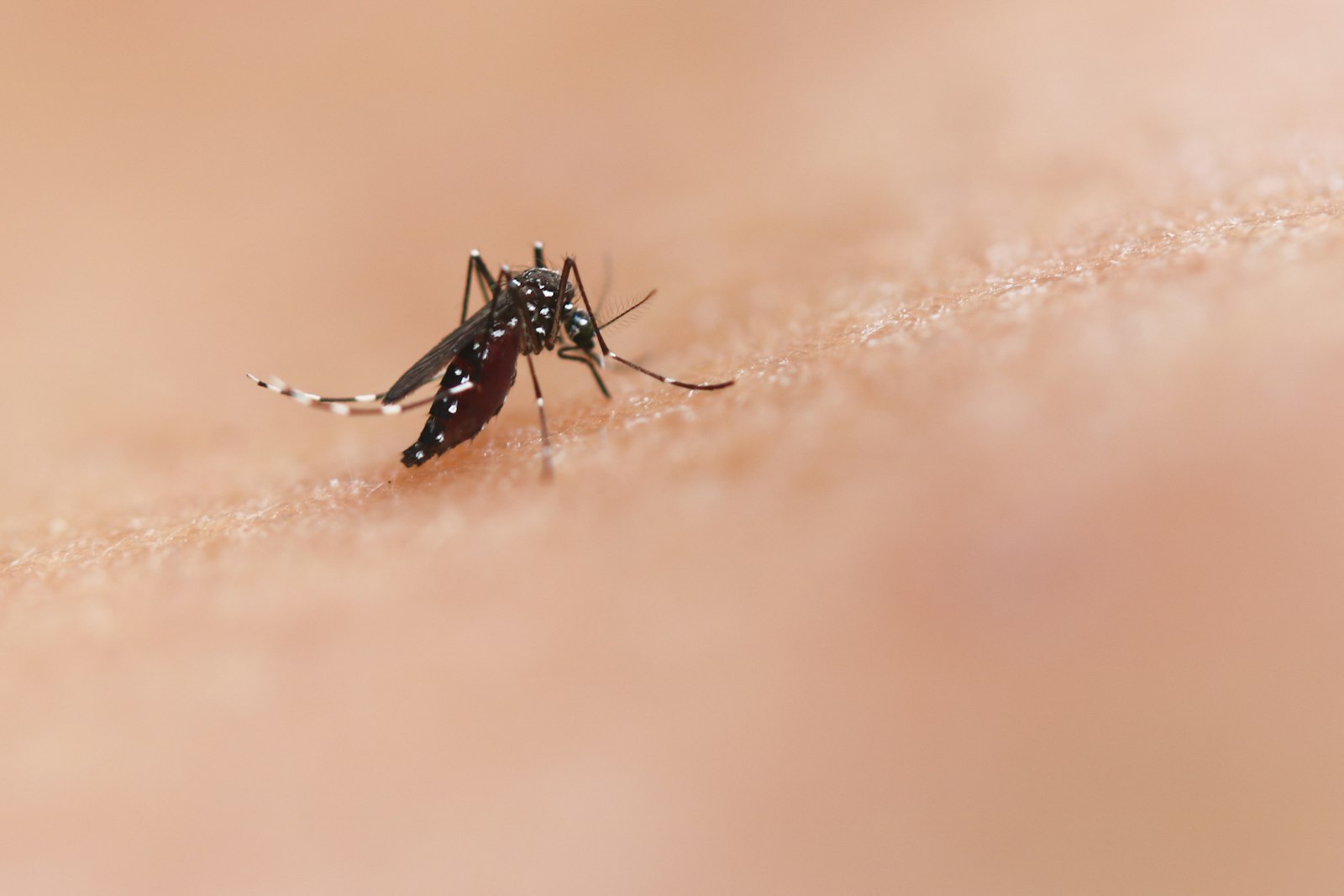

Every year after the monsoon, dengue becomes a household concern in Lahore. Schools send home reminders, the news reports rising cases, and families start looking more carefully at every mosquito in the room.
The good news is that much of the risk around your home is within your control. The mosquitoes that spread dengue breed in small amounts of standing water, very often in and around our own houses. This guide explains where they breed, what to check every week, and how spraying fits in.
A note on health: this article is about reducing mosquitoes at home. It is not medical advice. If anyone in your family has a fever or feels unwell, please see a doctor and follow guidance from official health authorities.
Short answer: The most effective way to protect your home is to stop mosquitoes breeding: once a week, empty, scrub and cover anything that holds water, including air cooler tanks, plant trays, buckets and rooftop junk. Add window screens, use repellent during the day when dengue mosquitoes bite, and use spraying as an extra layer rather than the only measure. In Lahore, stay especially careful after the monsoon, from around mid-September until the weather turns cold.
Know the enemy: the dengue mosquito
According to the World Health Organization (WHO), dengue spreads mainly through the bite of infected Aedes aegypti mosquitoes. A few facts about this mosquito explain why home-level action matters:
- It bites during the day. WHO notes that dengue mosquitoes are daytime biters, so protecting yourself only at night is not enough.
- It lives close to people. It breeds in containers around homes rather than in large lakes or rivers.
- It needs very little water. A bottle cap, a plant saucer or a forgotten bucket can be enough.
- Once infected, it stays infectious. WHO explains that after a mosquito becomes infected, it can transmit the virus for the rest of its life.
When is the risk highest in Lahore?
Rain leaves water standing everywhere, and warm temperatures help mosquitoes develop quickly. A Pakistan Meteorological Department alert, reported by Dawn in September 2024, described the post-monsoon period from roughly 20 September to early December as the dengue outbreak window, and said breeding stops when temperatures fall below 16°C.
In practice, that means September, October and November deserve extra attention, though it is wise to start your weekly checks as soon as the monsoon rains begin in July.
The weekly 10-minute home check
Both WHO and the US Centers for Disease Control and Prevention (CDC) recommend the same core habit: once a week, empty, scrub, cover or throw away anything that holds water. The CDC specifically says to scrub these items to remove mosquito eggs and larvae, so do not just tip the water out.
Pick one day, for example every Sunday morning, and walk through this checklist with your family:
| Where to look | What to do |
|---|---|
| Air cooler tanks | Drain completely, scrub the sides, let dry, refill only when needed |
| Flower pot saucers and plant trays | Empty and scrub, or fill with sand so water cannot collect |
| Money plant bottles and vases | Change water and wash the container every few days |
| Buckets, drums and tubs | Empty and turn upside down, or cover tightly |
| Overhead and underground water tanks | Check lids fit tightly with no gaps or cracks |
| Fridge drip tray | Empty and clean |
| AC drain pipe outlet | Make sure water drains away and does not collect in a container or puddle |
| Rooftop junk | Remove old tyres, broken pots, tins and plastic that collect rain |
| Roof and courtyard drains | Clear leaves and dirt so rainwater flows away |
| Bird and pet water bowls | Change water daily and scrub regularly |
| Fountains and ornamental ponds | Keep water moving or ask a specialist about treatment |
Hidden breeding spots people often miss
Most families remember the cooler and the plant pots. These are easier to forget:
- Bathroom corners and floor traps. Rarely used bathrooms, especially in guest rooms or upper portions, can hold still water in floor traps. Keep them fitted with a closed cover, and check them during your weekly round.
- Toilet cisterns without lids in servant quarters or rooftop washrooms.
- Tarpaulins and plastic sheets covering furniture or building material on the roof. Folds hold rainwater for days.
- Construction material. If your house or the plot next door is under construction, water collects in curing areas, mixing tubs and unused blocks.
- Car porches and garages. Small puddles in uneven floors and around washing areas.
- Dark, humid indoor corners. The CDC notes that mosquitoes rest in dark, humid places like under sinks, in closets and in laundry areas.
Water tanks need particular care. WHO points out that household water storage containers can become breeding grounds and that covering them helps reduce mosquito breeding. Make sure every tank has a well-fitting lid and that overflow and vent pipes are covered with fine mesh.
Keep mosquitoes out of the house
Breeding control reduces the number of mosquitoes. These steps reduce how many get to you:
- Window and door screens. Fit fine mesh screens on windows and ventilators, and repair torn ones. Keep doors closed, including the door to the roof.
- Mosquito nets. Use them for babies and anyone resting during the day, not only at night.
- Repellents. WHO lists repellents containing DEET, picaridin or IR3535 as options. Follow the label, especially for children.
- Clothing. Long sleeves and full trousers during the day, particularly in the early morning and late afternoon outdoors.
- Air conditioning. The CDC notes that using air conditioning and keeping doors and windows closed helps keep mosquitoes outside.
Where professional spraying fits in
Spraying is useful, but it works best as one layer of protection rather than the whole plan. The CDC advises using indoor sprays only if mosquitoes remain a problem after you have fixed screens and removed standing water, and notes that an indoor spray on its own will not keep a home free of mosquitoes.
A professional Mosquito & Dengue Spray can help when:
- you have a large house, lawn or rooftop with many resting places,
- mosquitoes keep appearing despite your weekly checks,
- there is construction or open land nearby that you cannot control,
- you want a treatment before or during the peak post-monsoon weeks.
Before a spray visit, ask what product will be used, how long family members and pets should stay out of treated areas, and whether food, utensils and fish tanks need to be covered. Keep children and pets away until the treated area is safe as advised.
Spraying in DHA, Gulberg, Model Town or any other area will only last if breeding sites are also removed, so keep up your weekly routine afterwards.
Work with your neighbours
Dengue mosquitoes do not respect boundary walls. Your efforts work much better if neighbours do the same. Share the weekly checklist in your street or building group, and report standing water in empty plots, parks or construction sites to your society management or local authority.
Know the warning signs
WHO notes that many dengue infections are mild or have no symptoms. When symptoms appear, they can include high fever, severe headache, pain behind the eyes, muscle and joint pain, nausea, vomiting, swollen glands and rash.
WHO also lists warning signs of severe dengue that need urgent medical care, including severe abdominal pain, persistent vomiting, rapid breathing, bleeding gums or nose, blood in vomit or stool, restlessness, and feeling very weak or cold and pale.
WHO states there is no specific treatment for dengue and advises against using painkillers such as aspirin and ibuprofen because they can increase bleeding risk. Do not self-medicate. If someone at home has a fever during dengue season, see a doctor promptly and follow their advice and the guidance of the Punjab health authorities.
Frequently asked questions
When is dengue season in Lahore?
Risk usually rises after the monsoon rains. A Pakistan Meteorological Department alert reported by Dawn in 2024 described the post-monsoon period from around 20 September to early December as the window for dengue outbreaks. Cases can appear outside this period too, so it is sensible to keep checking for standing water all year.
What time of day do dengue mosquitoes bite?
According to the World Health Organization, the mosquitoes that carry dengue bite during the day. That is why daytime protection matters, especially for children at home or school. Use repellent, long sleeves and screens during the day, not only at night.
Does mosquito spraying alone protect my home?
No. Spraying can reduce adult mosquitoes for a period, but the US CDC notes that indoor sprays will not keep a home free of mosquitoes on their own. If breeding sites remain, new mosquitoes keep emerging. Spraying works best alongside weekly removal of standing water and screens on windows and doors.
What should I do if someone at home has a high fever?
See a doctor promptly, especially during dengue season, and follow their advice on testing and treatment. WHO lists warning signs such as severe abdominal pain, persistent vomiting, bleeding gums or nose, blood in vomit or stool, and rapid breathing, which need urgent care. Do not self-medicate with painkillers like aspirin or ibuprofen without medical advice.
Can my air cooler breed dengue mosquitoes?
Yes, air cooler tanks are a well-known breeding spot because they hold still, fairly clean water for long periods. Empty the tank completely, scrub the sides and let it dry at least once a week. When you stop using the cooler for the season, drain it fully and leave it dry.
Make your home a harder place for mosquitoes
Most dengue prevention at home comes down to one habit: no standing water, checked every week. Add screens, daytime protection and, where needed, professional spraying for extra cover during the peak season.
If you would like help treating your home, lawn or rooftop, you can book a Mosquito & Dengue Spray or see other Pest Control services on MrHazir. The current price is shown on the service page before you book.
Photo: National Institute of Allergy and Infectious Diseases (NIAID) on Unsplash